
Pattaya sits only 150 km southeast of Bangkok, close enough for a two-hour escape but big enough to anchor one of Thailand’s strongest tourism engines. That tension explains why the city can feel like a beach break, a nightlife machine. A domestic weekend habit all at once.
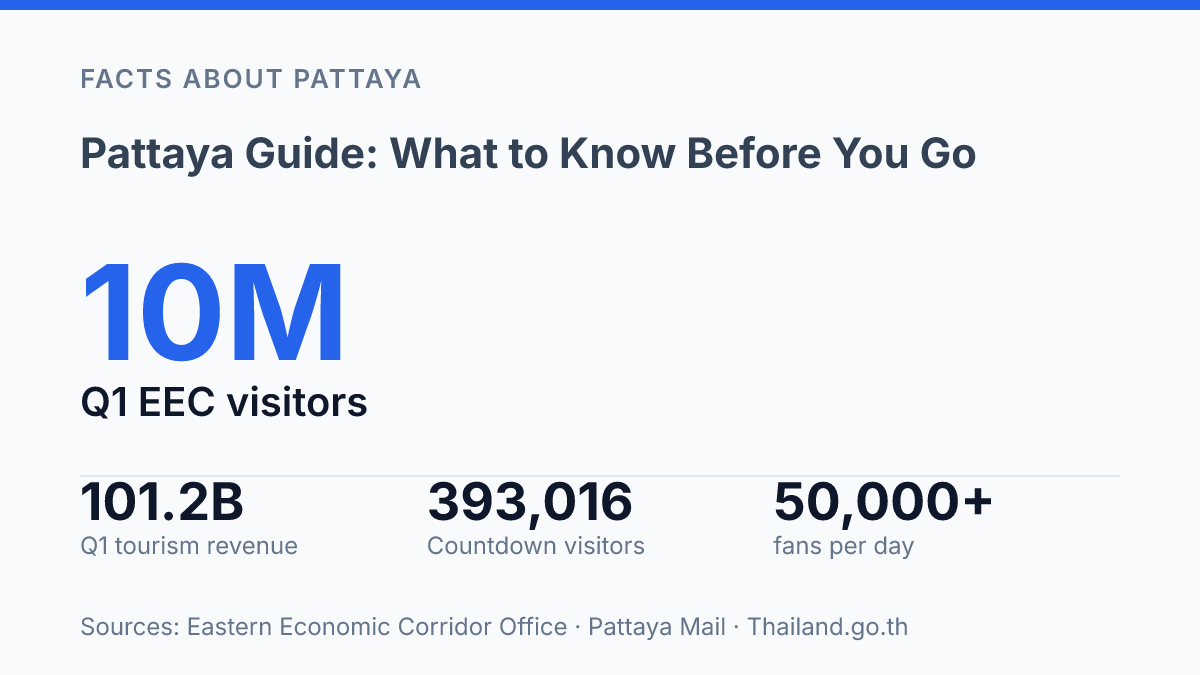
By Q1 2025, the Eastern Economic Corridor had drawn 10 million visitors, and Chonburi took 68.4% of them. That isn’t a footnote. It changes how you should read the place.
This guide looks past the easy clichés. You’ll get the coastal context, the reasons people keep coming, the feel on the ground. The practical calls that matter before you book. In my honest opinion, the mistake is treating it like a simple beach town.
It rewards travelers who understand the tradeoff: access brings choice. It also brings crowds, noise, price swings, and moments that don’t match the brochure.
How Pattaya fits into Thailand’s eastern coast
The Tourism Authority of Thailand places the city about 150 km southeast of Bangkok, close enough for a two-hour drive but far enough to feel like a separate coastal base. That distance matters. It ties the city to the capital without making it a suburb of it.
Pattaya sits in Chonburi Province on the Gulf of Thailand, along the eastern seaboard that runs toward Rayong and the wider industrial coast. This is not an isolated resort tucked at the end of a peninsula. It belongs to a working region of ports, highways, factories, weekend traffic, and coastal neighborhoods.
The administrative turning point came in 1978, when the city became a special local government area. That status gave it a different management structure from a standard municipality. Growth could be handled with more direct local authority over services, planning, and urban needs.
That setup helped the city expand fast. It also shaped the way it feels today. In my view, Pattaya’s location is its biggest strength. It also explains why the city feels more compressed and urban than many first-time visitors expect.
Easy access brings people, investment, roads, and pressure. You see all of that in the city’s form.
Two nearby names come up again and again: Jomtien and Naklua. Jomtien sits to the south and has its own long beachfront zone, while Naklua lies to the north with older local roots and a different pace. They’re close enough to feel connected to the main city, but each one changes how you read the map.
Why the city draws so many visitors
Few Thai beach cities turn an airport arrival into sand, seafood. A ferry queue as quickly as this one.
From Suvarnabhumi Airport, travelers can get onto the motorway network toward the eastern coast without crossing central Bangkok. That road link is the quiet engine behind the city’s appeal: it makes a one-night escape, a long weekend, or a last-minute beach break feel simple.
Scale follows access. In 2019, the city received about 15 million visitors, a volume that changes how a resort behaves.
It supports big hotels, frequent transport, late kitchens, tour desks, malls, and event infrastructure. It also means the place can feel built for volume rather than retreat.
That demand leaves a physical mark. CBRE’s H2 2025 local hotel figures listed 34,743 keys across 161 properties, so visitors arrive to a market with broad choice at many price levels.
The upside is convenience. The downside is that the city rarely feels undiscovered.
Pattaya Beach matters less as a perfect postcard and more as a practical base. You can swim, eat, book a boat, find a massage, meet a driver, and still be close to your room. That compact setup is exactly why first-time visitors understand the place fast.
The walking streets add another layer, and not only after dark. They concentrate restaurants, bars, street food, souvenir shops, and people-watching into a small area.
That saves time. It also creates the crowded, commercial feeling that some travelers dislike when they compare it with quieter Thai beach towns.
Nearby island trips widen the appeal. Koh Larn gives visitors clearer water and beach variety without forcing them to change hotels, so families, couples, and mixed-age groups can split the difference between city convenience and island scenery. In my honest opinion, that flexibility is the real reason the destination keeps pulling repeat visitors, not any single attraction.
What the city is really like on the ground
The truest sign of the city’s economy is not the neon. It’s the worker traffic before sunset.
Hotel staff, kitchen crews, cleaners, drivers, security guards, massage therapists, shop workers, and building crews all move through the same streets that visitors read as leisure space. That overlap gives the city its blunt, practical feel.
Thai residents form the base of daily life. They share the ground with long-stay foreign residents and short-term tourists who use the city in completely different ways.
One group is raising families, paying rent, and commuting to shifts. Another is here for a month, a season, or a few loud nights… and those needs don’t always fit neatly together.
In my humble opinion, what most people miss is that Pattaya isn’t just a party city. It’s a working city first. That changes how you read everything from traffic to housing. A street jam may be tourists heading to dinner.
It may also be staff changing shifts or contractors moving between job sites. A new condo tower may look like a lifestyle product. It also means months of construction labor and pressure on nearby lanes.
The scale is real. Thailand PRD reported that the wider province earned 316.8 billion baht in tourism revenue in 2024, a figure that explains why so many livelihoods here orbit rooms, meals, transport, entertainment, repairs, rentals, and maintenance. The city also sits inside the Eastern Economic Corridor economy, so tourism is not the only force shaping wages and development.
The beachfront zones feel designed for spending: signs in multiple languages, tour desks, bars, restaurants, malls, and transport offers packed close together. Move inland and the mood changes fast. You see apartment blocks, laundries, market stalls, schools, repair shops, and small Thai restaurants serving people who live there, not people passing through.
That contrast can surprise first-time visitors. The city can feel polished from a hotel balcony and rougher at street level two turns away.
Neither version is fake. They exist at the same time, and understanding that mix makes the place easier to read without reducing it to a brochure or a stereotype.
Practical things to know before you plan a visit
December can feel like two different cities in the same afternoon: easy beach weather by day, then packed roads once holiday events begin. The safest planning window is November to February, when Thailand’s dry months bring lower humidity, better beach days, and fewer rain-forced changes.
Prices rise then, and major event dates can distort availability fast. According to Pattaya Mail, Countdown 2025 recorded 83.05% average occupancy across local hotel and resort rooms, so book early if your dates touch New Year.
Beach choice should match your tolerance for convenience. Pattaya Beach is the simplest base if you want transport, tours, shopping, and nightlife close by. Jomtien Beach suits slower stays, families, and people who want more room to breathe. Koh Larn works best as an island reset, but ferries add queues, fixed return times, and less freedom once the day turns.
The easy answer is to stay near the beach. That can also mean more noise, more traffic, and less of the city’s actual character. In my view, the best base is not always the one closest to the water. If you sleep lightly or dislike late-night traffic, stay a few streets back and spend the savings on transport.
Baht buses are the easiest local option once you understand the route pattern. They run like shared pickup trucks, so confirm the direction before you hop on and keep small notes ready.
Motorbike taxis are faster for short hops, but agree on the fare first and don’t treat the helmet as optional. Late at night, a ride-hailing app or hotel-arranged car can be worth the extra cost.
Crowd levels change more by calendar than by geography. Weekday mornings can feel manageable, then weekends and Thai holidays can fill the same sand fast.
Low season brings the opposite tradeoff: cheaper rooms and easier roads, but more rain risk and less energy in some areas. In July 2026, the Chonburi Tourism Federation said low-season visitor numbers were down 20–30%, with many hotels at only 15–20% occupancy, according to Pattaya Mail.
Two or three nights is enough if you want a beach break, a night out, and one offshore day. Stay longer only if you’re comfortable with the city’s practical side: traffic, mixed crowd levels, and transport choices that reward a little local patience.
What smart planning changes before you arrive
The smartest move now is to treat demand as uneven, not permanent. A city that can run at 83% occupancy during a holiday countdown can also see hotels slip to 15–20% in low season. That gap is where your trip gets better or more expensive.
Watch the calendar before you watch the room rate. Tomorrowland Thailand is scheduled for December 11–13, 2026, with more than 50,000 fans per day expected at Wisdom Valley. Book late that week and you’re not competing with beachgoers. You’re competing with an event economy.
In my humble opinion, the best visit won’t come from chasing the cheapest room. It’ll come from knowing when the city is breathing out, not just when it’s shouting.
Frequently Asked Questions
Q: Is Pattaya safe for tourists?
A: Yes. You should stay alert in crowded areas and watch your belongings. Petty theft is the main issue, not major crime. In my view, the smartest move is simple caution, not paranoia.
Q: What’s the best time of year to visit Pattaya?
A: November to February is the most comfortable stretch, with cooler weather and less heavy rain. March to May gets hot fast. The wet season can make beach plans less predictable. If you hate sticky heat, that window matters.
Q: How many days do you need in Pattaya?
A: Two to four days is enough for most visitors. That gives you time for the beaches, a day trip. A night out without rushing. Stay longer if you want a slower trip, but many people run out of things they actually want to do after that.
Q: Can you get around Pattaya without a car?
A: Yes, you can use songthaews, taxis, motorbike taxis, and ride-hailing apps. The tricky part is short trips that look cheap but add up fast if you keep moving around all day. Plan your routes first and you’ll save money.
Q: Is Pattaya good for families?
A: Yes, if you choose the right area and skip the parts of town built around nightlife. There are beaches, water parks, and easy day trips that work well with kids. In my honest opinion, Pattaya is better for families than its reputation suggests, but only if you travel with a clear plan.